Neuroinflammation and Neurodegeneration
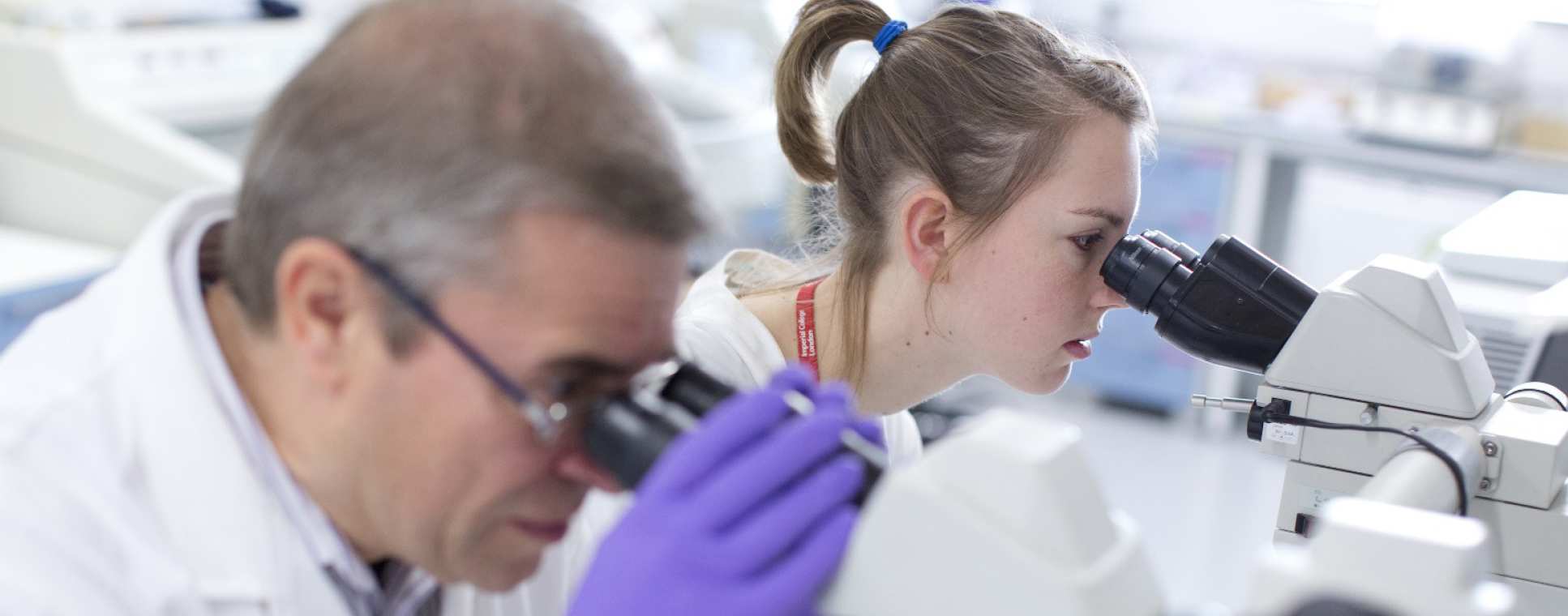
The Centre of Neuroinflammation and Neurodegeneration (NN) investigates mechanisms of neurodegeneration and neuroinflammation common to many neurological disorders including Alzheimer’s disease and other dementias, Parkinson’s disease and Parkinson’s Plus syndromes, Motor Neuron diseases, Huntington’s disease, and Multiple Sclerosis. Several clinical and preclinical studies are currently ongoing with the aim to improve our understanding of these diseases and develop and test novel therapeutic strategies. The Centre fosters close collaboration between both clinicians and basic science researchers from a wide range of scientific backgrounds to facilitate effective translational research.
The Centre is home to The Multiple Sclerosis and Parkinson’s Tissue Bank, a national collection of central nervous system (CNS) tissue samples donated by individuals with multiple sclerosis (MS), Parkinson’s disease and related neuroinflammatory and neurodegenerative conditions. The Tissue Bank’s mission is to facilitate these discoveries by making well-characterised human material of the highest quality readily available to the research community engaged in studies aimed at discovering the cause and better treatments for multiple sclerosis and Parkinson’s disease.
Our academic members of staff are major contributors to the Undergraduate and Postgraduate teaching programmes in Neuroscience, Neurology and Molecular Biology at Imperial College London. We also offer opportunities for continuous personal development in academia.
Centre leadership
Head of Centre
Professor Paola Piccini's research focuses on movement disorders, the use of Positron emission tomography as a method of investigating aetiology, and the effects and complications of therapies (particularly new neuroprotective and neurorestorative therapies, in Parkinson’s and Huntington's disease). More recently, she has used functional imaging to assess in vivo neuroinflammatory processes in multiple sclerosis.
Deputy Head of Centre
Dr Amin Hajitou’s research uses the harmless bacteria virus, bacteriophage (phage), to design targeted intravenous DNA delivery systems. He developed a novel hybrid phage which showed the first success of systemic gene targeting to cancer in vivo. In 2007, Hajitou joined Imperial College London as a Lecturer and established his research team, then became Senior Lecturer in 2013. His research group has become a leading authority in phage-guided gene delivery technologies and generated various patent applications
Key researchers
Professor Paola Piccini
/test01/channel_2/media/migration/faculty-of-medicine/Paola_Piccini--tojpeg_1479909661431_x4.jpg)
Professor Paola Piccini
Professor of Neurology
/test01/channel_2/media/migration/faculty-of-medicine/Screenshot_2016-11-23-15-09-37-(002)--tojpeg_1479915726009_x4.jpg)
Professor Richard Reynolds
/test01/channel_2/media/migration/faculty-of-medicine/richard-reynolds--tojpeg_1479909987497_x4.jpg)
Professor Richard Reynolds
Professor of Cellular Neurobiology
Professor Jacqueline de Belleroche
/test01/channel_2/media/migration/faculty-of-medicine/jackiedebelleorche--tojpeg_1479910105146_x4.jpg)
Professor Jacqueline de Belleroche
Professor
Dr Paul Edison
/test01/channel_2/media/migration/faculty-of-medicine/pauledison--tojpeg_1479910175241_x4.jpg)
Dr Paul Edison
Clinical Senior Lecturer
Dr Magdalena Sastre

Dr Magdalena Sastre
Senior Lecturer
Dr Paolo Muraro
/test01/channel_2/media/migration/faculty-of-medicine/paolomuraro--tojpeg_1479910245622_x4.jpg)
Dr Paolo Muraro
Clinical Reader in Neuroimmunology
Professor Nicholas Mazarakis
/test01/channel_2/media/migration/faculty-of-medicine/Nicholas-Mazarakis-04-11-2016-3final--tojpeg_1478608478171_x1--tojpeg_1479910327532_x4.jpg)
Professor Nicholas Mazarakis
Chair MolBioMedicine and Head of Gene Therapy
Dr Kambiz Alavian
/test01/channel_2/media/migration/faculty-of-medicine/kambizalavian--tojpeg_1479910411457_x4.jpg)
Dr Kambiz Alavian
Non Clinical Lecturer
Dr Nelofer Syed
/test01/channel_2/media/migration/faculty-of-medicine/nelofersyed--tojpeg_1479910574382_x4.jpg)
Dr Nelofer Syed
Senior Research Fellow
Professor Stephen Gentleman
/test01/channel_2/media/migration/faculty-of-medicine/steve-gentleman--tojpeg_1479910935604_x4.jpg)
Professor Stephen Gentleman
Professor of Neuropathology
Professor Vasso Episkopou
/test01/channel_2/media/migration/faculty-of-medicine/Vasso-Episkopou--tojpeg_1479911026362_x4.jpg)
Professor Vasso Episkopou
Professor in Developmental Biology